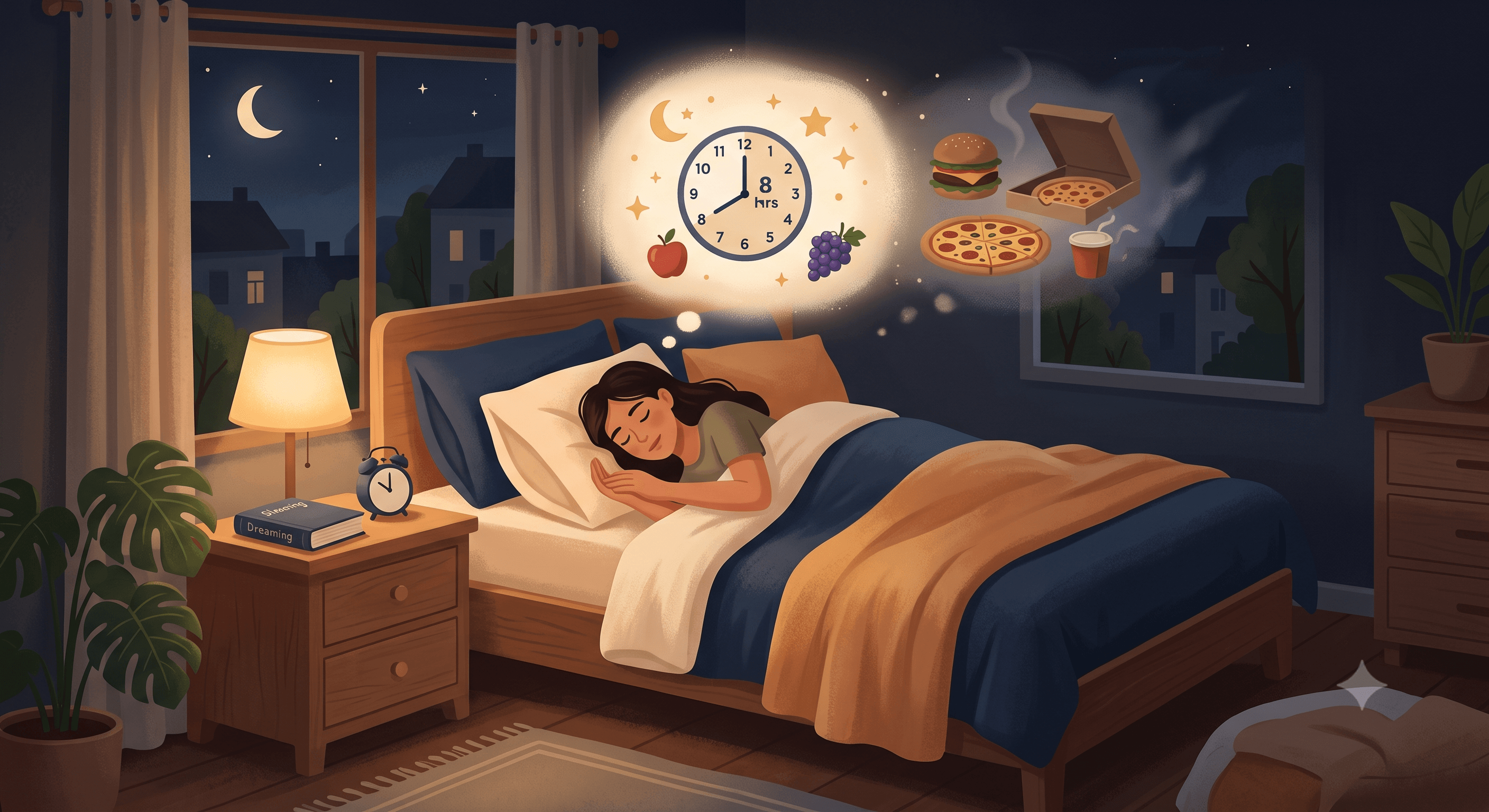
AI-generated illustration
Sleep vs. Evening Appetite
Why one extra hour in bed can ease your energy deficit
After a short night's sleep, the brain reacts more strongly to calorie-dense food, and self-control takes more effort. Waking hours also stretch longer, so there are simply more opportunities to eat. Hunger feels sharpest exactly when the kitchen is still open.
Sleep deprivation dulls attention, sharpens the pull toward quick reward, and lowers your willingness to cook something that takes time. A delivery order on a night like that gets an unfair head start.
A home experiment in sleep
In a randomized study by Tasali and colleagues, 80 overweight adults who typically slept less than recommended took part. They continued living at home and chose their own food. Some participants received personalized counseling on extending their sleep. The control group kept their usual routine.
After counseling, sleep duration grew by more than an hour, and daily energy intake dropped by roughly 270 calories. Participants weren't given meal plans or asked to count anything. Energy expenditure didn't change meaningfully, so the difference came mainly from the intake side.
Turning the result into a habit
It helps to start by noting your wake-up time and seeing how much sleep is actually left in the day. With a fixed morning schedule, the real lever becomes going to bed earlier. A week-long sleep diary will reveal the problem more accurately than any impression from a single good night.
Try wrapping up evening tasks 30 minutes earlier and dimming the lights. Leaving the phone outside the bedroom keeps notifications from turning sleep into a negotiation. For sensitive sleepers, afternoon caffeine delays falling asleep. A cool, dark room removes a lot of the small reasons for waking up.
Where the life hack ends
Loud snoring, breathing pauses during sleep, morning headaches, and pronounced daytime sleepiness call for a medical evaluation. These signs show up in obstructive sleep apnea, which is linked to weight gain and cardiometabolic risk. Simply spending more time in bed can leave the underlying cause untreated.
Sleep makes appetite easier to manage, but an energy deficit still determines weight loss. Sometimes the most scientifically sound thing you can do in the evening looks completely unproductive: you turn off the show and go to sleep.
Certified nutritionist with 8 years of hands-on consulting experience. Works with real people, their habits, their setbacks, and their everyday kitchen realities.