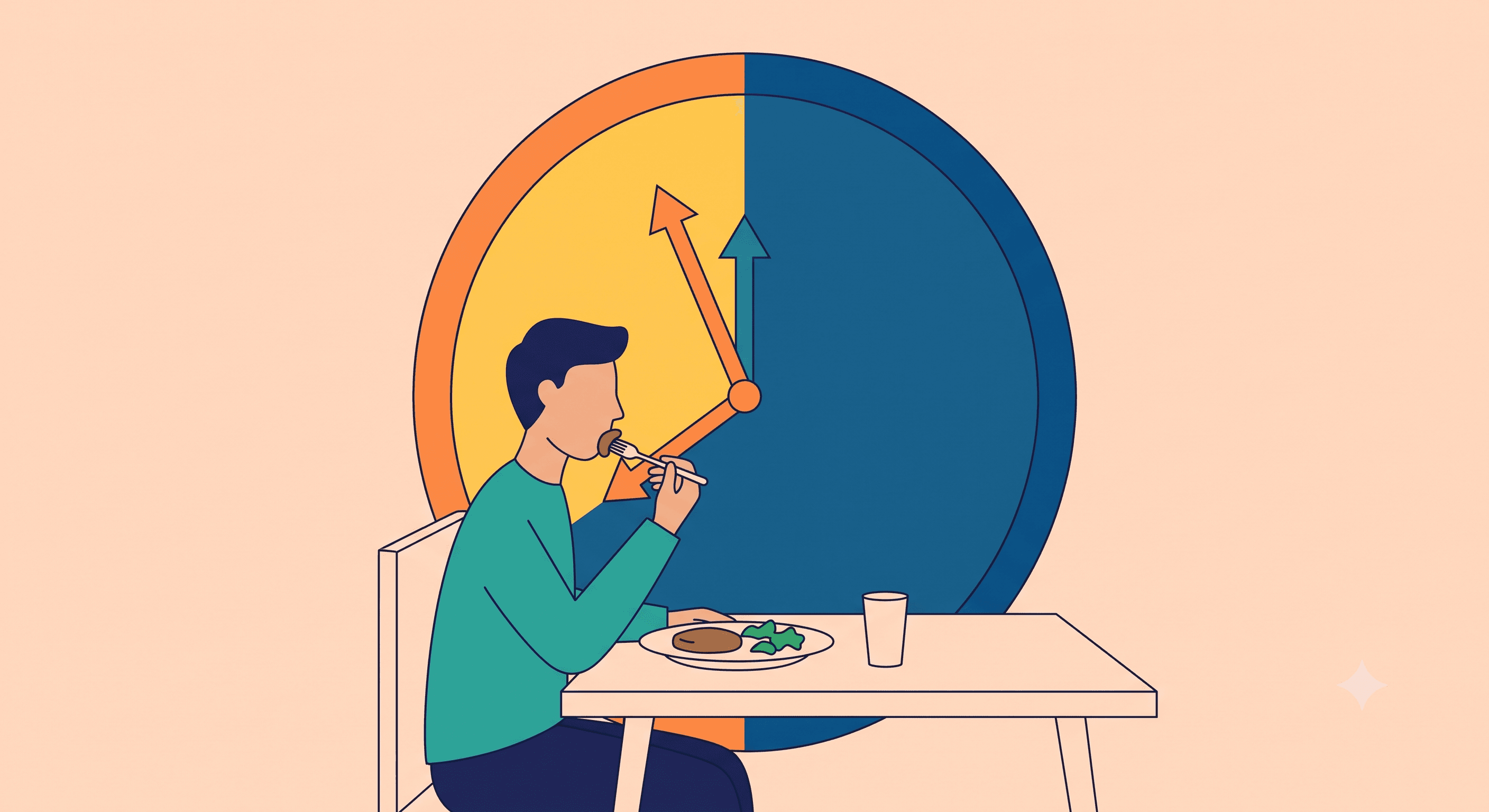
Created by AI
Can You Lose Weight by the Clock
What time-restricted eating can actually do, and where the schedule's effect ends
Body weight drops when the body takes in less energy than it burns. A shorter eating window sometimes cuts down on snacking and late-night meals. The effect comes through a change in behavior, even if nobody is tracking anything.
Meal timing can affect glucose, sleep, and hunger, but the size of the effect depends on the person's routine and health. A clock has no enzyme that breaks down fat — otherwise alarm clocks would cost noticeably more.
A test with matched calories
In a randomized trial published in the Annals of Internal Medicine, 41 adults with obesity and impaired glucose metabolism took part. Researchers provided all the food and kept calorie content identical between groups. One group ate within a restricted time window, the other kept a wider one. This design separated the effect of timing from the effect of an energy deficit.
Both groups lost a bit more than 2 kilograms, and no statistically convincing difference turned up between the two schedules. The result suggests that matching calories can cancel out any advantage a short window might offer for body weight. A schedule keeps its value mainly when it makes it easier for someone to eat less.
When a window actually helps
For people who tend to snack in the evening, a clear cutoff sometimes makes the decision simpler. Instead of re-evaluating hunger after every episode of a show, a pre-set rule takes over. In a recent trial, several time-restricted eating schedules produced an extra drop in weight on top of Mediterranean-diet coaching, and an early window wasn't required for that to happen.
A practical starting point might look like a 10-hour window, worked out around your job and family meals. Inside it, regular full meals and enough protein still apply. If the schedule triggers nighttime hunger, next-day overeating, or irritability, the window should be widened.Evidence on different schedule variants supports flexible timing rather than one fixed rule.
Who needs extra caution
In diabetes, insulin and certain medications can trigger hypoglycemia during a long stretch without food. Pregnancy, an active eating disorder, and adolescence also call for separate medical evaluation. Night shifts change the circadian context, so a daytime schedule can't just be copied over mechanically.
If someone ends up mentally having dinner before dawn once the window closes, the schedule is too strict. A plan that cuts down on snacking while protecting sleep is more practical. A scientific routine has to fit into an actual life, or the fridge will quickly hold an emergency session out of hours.
Certified nutritionist with 8 years of hands-on consulting experience. Works with real people, their habits, their setbacks, and their everyday kitchen realities.